Sunday, March 1, 2009

Vaudeville Day 20 - Last day in the Bagging Room

Today is the final day of the 4 week rehearsal period. After this most of the rehearsing will be done in the theatre. Time sure flies. The poll on whether 4 weeks rehearsal is enough time gave the result that 54% thought it was too short. I might re-poll the same question next week to see whether opinions have changed over the course.

As per the pattern established over the last few days of rehearsal, today will be all about detailing important scenes. The post from Day 18 will give you an insight into how this goes if you didn't read that post.

I drop down to Wardrobe again to see how they're going. Amanda and Kate are working extraordinarily hard, and say they're on schedule, which means also working on the weekend. That's the nature of this kind of work; it's gotta be ready when it's gotta be ready.

Kate is dying some of the corsetry that Amanda was sewing up last time I was down there. Amanda tells me that making the underwear for this show has been incredibly time consuming. The amount of sewing is extreme. How extreme? Well, so far she's used 2 and a half kilometres of thread. 2 and a half kilometres of thread! (I know I'm repeating myself, but I'm trying to get my mind around it.) A handful of finished costumes hang around the studio, including Allarkini's robe, which looks pretty amazing.

She also volunteers that the actors seem more comfortable now. This is an interesting comment; of course it's the make-up and costumers who the actors unload all their worries and concerns upon. If things have calmed down for Amanda and Kate on that front, it's a good sign.

There is activity on a lot of different fronts today; everybody understands that the time available to work through issues is contracting with every minute.

Lawrence is here again today. I spend some time in the Shell Room with him, Jonathon, Darren and two of the actors [names withheld for magic security reasons]. The way Lawrence works is brilliant. His is a very technically specific craft, yet the way he chooses to employ the techniques are built purely on his imagination and connection with the show. The scene he is working with the actors on at the moment is based upon one line in the stage directions of the play. It has been Lawrence's job to understand the characters, interpret the timbre and atmosphere of the scene, and then construct how this single line is best to be realised.

The way Lawrence moves is very fluid and he is highly physically controlled. The way he directs the actors is a very carefully balanced combination of choreographic precision, with instruction on how they need to play the scene to convey what is 'real.' He is patient and generous, and as he describes how he has constructed the scene with the limitations of the actors' experience and the world of this particular show in mind, the enormous complexity of his task and the skill with which he's achieved it comes into view.

I also take some time to speak with Mark Jones, the composer and Musical Director of the show. Our conversation is far-reaching and raised some really brilliant insights into the work. I've decided to report on our conversation in two parts, because I can't possibly fit it into a single post. Also, some of what we talked about in relation to how the music works in the piece as a whole might be useful contextualised within the how the piece is shaping up for the first preview on Friday night.

Mark joined the project very early on as a musician and musical director. When he joined the project for the first development period he says there was no plot and no narrative; just a broad concept and some early character sketches.

Mark's character, Bones, the 'black faced' piano playing 'end man' existed very much in the way that he does now. Other characters have come and gone from different drafts, and others have always been in the script in some form, but have had significant evolution. The essence of the Bones character has remained quite constant from the beginning as Mark sees him.

The songs are such an important part of the piece. I ask him about the evolution of their composing. Mark says that in the first development he played existing music, but since that first development he's worked on and off on composing original songs for the show in collaboration with Chris, Lally and Maryanne.

The songs have begun from varying starting points. Some of them began with a melody that Mark created, others started from the idea for a scene in which they're central, others started with written text from Chris and/or Lally. In some ways they are still developing as verses or choruses get added and cut in accordance with how they are working in the show.

I ask Mark whether the songs are 'period' songs, and how he has dealt with that issue. His response echoes that of both the set and lighting designer. Much of the music he has written has a kind of a Rag Time feel, but it is not precisely music of the period and genre. Strictly speaking, the recordings of vaudeville artists of the time reveal simpler music, and quite a lot of talking with the piano underneath.

Mark's says his composition is definitely more musically sophisticated than the recordings of the music of the time that exists today. Like Jonathon and Richard, Mark has gone for a 'sense' of period, but has not been bound by historical 'fact' in what he's provided to the production.

The production must be resonant and interesting for today's audience. This means a 'sense' of period is better than historical accuracy in the case that the historically accurate music style does not serve the production. But the lines of what 'serves' the play and 'works' for an audience is not as clear as this statement suggests. For example, fuzziness in the period of music has been deemed okay, but last week they were researching the exact date the 'Dryzabone' coat was introduced. In the case of the coat the sense of historical accuracy that 'served' the play was understood to be far more literal.

These thresholds for accuracy clearly exist in all artistic works. Some 'facts' are considered sacred, some are considered malleable, and some just aren't considered much at all. How these lines get drawn is not always clear; partly they are decided by individual artists, partly by community 'standard,' partly on an individual basis by every audience member who accepts or rejects how these elements work within the piece.

Why it 'works' that the historical accuracy for some things can be massaged, but the accuracy for something else cannot is an interesting question. But theatre artists will say that their 'sense' that something is or isn't working in relation to its historical accuracy is very clear to them.

Chris phrase of the day; “Does anyone know where the invisible thread is?”

Thursday, February 26, 2009

Vaudeville Rehearsal Day 19 - Stuntmen or daredevils?

Thursday morning. Yesterday was detailing; that means today is the run.

The scheduled beginning time for the run is 10.30. There is a whole line of chairs set up at the back of the room when everybody arrives. The mere suggestion of an audience raises the ante. They are for a group of Malthouse permanent staff that are due to attend the run. The atmosphere in the room is more formal, and Darren, the Stage Manager also takes on a suitably more formal tone.

The tension in the room is a higher today, but it's manifesting itself more in focus than in efforts to release. It's an interesting curve of rising and lowering tensions that show themselves in the final stages of a rehearsal process.

I was talking to Matt Wilson about show anxiety. I bring up a thought from one of David Mamet's books that the nervousness of performing in public IS the fundamental energy of theatre. The stakes of being humiliated or adored are extraordinarily high. Without that fear, theatre is boring. The actors need to be scared. I often find myself relating this notion to nervous performers when they think they're under-prepared. (Although I have been told that my interpretation of these comments is a bit skewed.)

Matt says that it is a similar phenomenon with stuntmen. He tells me that stuntmen need to be scared before they perform a stunt. The fear keeps them alert to potential dangers, it keeps their survival instinct intact. They need to stay completely safe because they need to be able to get up the next day and do the stunt again. It occurs to me that their recognition of the danger resonates through the performance of the stunt. If the stuntman doesn't embody the potential danger, perhaps it's not as exciting for the audience.

The daredevil though, is a different breed, he says. The daredevil isn't scared. The daredevil has no survival instinct to stop them from getting hurt. If they crash and burn it's part of the experience, the lifestyle, the reason they do it. This is also exciting for an audience, or perhaps thrilling is a more accurate word, but possibly self-destructive for the daredevil. The conversation left me wondering whether some actors are stuntmen, and others daredevils.

The stakes raised by the Malthouse company staff fires the run. It feels like several steps advanced from anything the show has been before. It's a huge release of tension, and Darren calls lunch.

But, the release of tension at the good run is shortlived; after lunch it's back into details. There's still heaps of work. Heaps of technical details, plenty of moments that will need more detailing before they're ready. What needs work is pretty crystal, and Mark tells me later that the afternoon's work feels good. Friday's run is cancelled in favour of detailing. At this stage it feels that the notion of the 'whole' is now pretty solid in everybody's performances. It's the details within scenes that is now the priority.

Tomorrow is the last day of rehearsal before production week. Lawrence is here again, and I'll catch up with Wardrobe and to see how they're getting on. Next week most of the work will be done in the theatre. It's a highly technical show. There's the ocassional sign from the cast that they're worried about just how technical the show is going to be, and whether there's enough time to master the technical details. But for now, they are going hard on mastering the scenic moments. Tick, tock, tick, tock.

Wednesday, February 25, 2009

Vaudeville Rehearsal Day 18


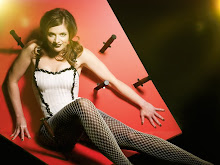
Support for being a Human Spider in the poll is pretty slight, so I've added this picture of one of the greats from old time Vaudeville to inspire you. Looks like a great act! So get on and vote.

Today it's a 'detailing' day. There is a complete schedule of scenes to run for the rest of the rehearsal period pinned up on the door. The scenes they are working on at this stage of the rehearsal are ones that have been causing issues; they're scheduled for further detailed work. To give you a sense of these rehearsals I've recorded a second-by- second breakdown of an hour in the Goodbye Vaudeville Charlie Mudd rehearsal room.

The hour is in the first half of the day. The company has just returned from a morning break, and will be working on a big group scene towards the end of Act I. Half way through this hour Carlee arrives to work on a choreographic scene close to the very beginning of the show;-

0 – 1.06 secs – Chris sets up the scene they will do, quick cast discussion of specifics and where everybody is positioned leading into it.
1.06 – 2.14 Runs the scene
2.14 – 2.45 Stops, discuss details of the final moments.
2.45 – 3.01 Run last bit of scene again.
3.01 - 7.49 Julia asks about technical details relating to the scene. Chris explains how the technical part is going to work. Following the tech explanation, they discuss how the broad pattern of movement works again. Chris works through the stakes of scene, what the important points in the scene are. Then moves to some character details that provide clarity for everybody's roles in this scene. More physical explanation, musical clarification for Mark. About to begin. Wait, another quick question that generates some more clarification for the other characters in the scene.
7.49 - 8.15 Run the last bit of the scene again.
8.15 – 8.38 Chris gives note to Alex about how he's coming in on an important line.
8.38 - 9.22 Runs the last bit again, then moving into the next bit of the scene.
9.22 - 10.35 Chris stops them. Clarity for Jim and Julia of the next bit.
10.35 - 11.29 Runs this bit again. Chris stops it.
11.29 - 12.48 Chris jumps in and clarifies the intention of the scene with Jim, then works in how this effects the other characters again. Actors do a 'dry' line run.
12.48 – 14.44 Run everything they've looked at from the same place again. Pause for a line check, without breaking the scene, begins again. Continues to run further into the scene than previously. Chris freezes the scene, then clarifies what's happening for the other characters in this specific moment. They are about to continue on without breaking...but, another question.
14.44 – 17.33 They break for real this time now, and Chris talks with Jim and Christen about their responses to the situation. There's some discussion about a line that's been proving difficult. Then they're into starting positions again.
17.33 – 17.54 Run from the same place again. Stops.
17.54 – 18.15 Quick vocal detail.
18.15 - 18.46 Run from the same place again. Stops.
18.46 – 19.00 Quick physical detail.
19.00 – 19.18 Run. Stop. Quick line check.
19.18 - 20.24 Run again, this time moving into the next part of the scene. Chris stops it when he's happy they're through that bit.
20.24 - 22.34 Chris clarifies that everything to that point is working. They move on to talk about what happens next in the sequence of scenes. Chris talks to Alex about the detail of the moment to come. Then adds Julia in.
22.34 - 23.34 Run again, starting from an earlier point to get back in.
23.34 – 23.52 Quick detail from Chris; physical and intention of scene.
23.52 - 26.20 Runs again from same spot, (Chris explains FX as they run, real time.) Runs on into the next section. Real time, Chris directs detail, with the scene continuing to run. Scene comes to its end.
26.20 - 27.21 Chris gives it the thumbs up. They're going to run everything they've looked at in the previous half hour. They discuss the set up, precisely which line to run from in the script, where they're positions are.
27.21 – 32.00 They run it all. One clarifying detail, midway, but they stay in it.
32.00 – 34.20 Stops. Chris likes it. Quick question about the overall pitching from Jim. Right? Not right? Chris thinks it's okay. They move onto the dance training. Carlee is here. They set up for the particular scene that Carlee is here to drill. Positions.
34.20 – 36.28 Into the dance sequence. Running it from the top.
36.28 – 37.31 Carlee gives notes. First few steps; good. Identifies problem spot.
37.31 – 37.59 Work through problem spot; slow speed. Stops.
37.59 - 38.42 Begins from the top again, same spot as above. Move by move, half pace. Stop
38.42 – 39.59 Carlee discusses details, and moves to work on the next bit.
39.59 – 40.21 Quick run
40.21 - 40.52 Again. Half time.
40.52 – 41.12 Carlee clarifies details.
41.12 - 41.30 Run.
41.30 – 41.50 Detail.
41.55 - 42.38 Run.
42.38 – 44.21 New bit to look at. Carlee talks the positioning. Discussion of who's looking at who to lead. A discussion of timing of the middle section.
44.21 - 44.56 Run. Carlee demonstrates and yells instructions for steps and timing.
44.56 – 47.58 Back to beginning. Discuss detail. Dry run of timing. More detail of steps and arms. Question to Mark on music at that point. Carlee re-details a previously broadly specified movement.
47.58 - 48.13 Walk it again from that point.
48.13 - 49.16 Quick question. Broad approval. Set up from beginning again.
49.16 - 50.02 Run from top. Carlee dance instructs everything again from out front.
50.02 - 51.30 Discuss positions of the final moment, and actions. They practice it. Then discusses the timing, given the little changes from the re-detailing.
51.30 – 51.40 Run
51.40 – 53.15 Discuss; Carlee wants to re-detail; it's still not quite working. They work through that.
53.15 – 53.39 Run.
53.39 - 55.27 Re-detail again. Something a bit looser; the tight choreography isn't quite right. They discuss that the movement will be driven by an energy now, rather than a tight choreography. Another question about final pose.
55.27 – 56.03 Run
56.03 - 58.49 Carlee is really happy with this final version. Chris wants to clarify the emphasised beats. Carlee asks the cast if they want to go from the top or just the last bit; they want to do the whole thing. Chris wants them to come in from a long way back, so as to cover the transitional space. Carlee and Chris clarify some further details. Chris sets them up for running the scene from the top.
58.49 - 1.08.20 Run from the beginning of the sequence.
1.08.20... ...

That's a typical hour for this time in the process. So many simultaneous questions, thoughts, ideas, stopping, starting, stopping, starting, and sometimes over and over for a single moment.
Tomorrow it's a run first thing - the exact opposite of today. What will it bring?